April 24, 2020

ACROSS THE BRIDGE (1957)


This slightly longer-than-necessary, one-hundred-three-minute British film is notable for Rod Steiger's gravitating performance, along with some interesting camera positions and closeups in the film's early stages. His propensity for offbeat, often volatile characters is legendary, though his range seemed to have few boundaries. All other characters fade by comparison. Yet for this film, he is almost an absurd figure of illogical attitudes and intents while channeling fellow method actor Brando. His German accent is no better than Artie Johnson from Laugh-In television fame with his “Vely Intelesting” signature comment. What might have been another signature role, the film's believability factor takes a hit as he flees the UK's prosecution. Still, it is an unusual, yet forgotten Steiger film.

Based on a short story of the same name by Graham Greene, the film was produced by The Rank Organisation and directed by Ken Annakin and filmed at Shepperton Studios, Middlesex, England, UK, and in Spain. The set-up is quite engaging as Scotland Yard arrives with embezzlement charges at Steiger's British office. The grand doors are opened, providing visual evidence that they have the right man as they witness a self-aggrandizing floor-to-ceiling “Stalinesque” self-portrait of himself. But Steiger gets the warning while at his New York headquarters. With inevitable escape procedures always planned ahead, he makes his immediate departure to Mexico for a planned three-month hideout. Scotland Yard sends an inspector across “the pond” to apprehend the condescending egoist.
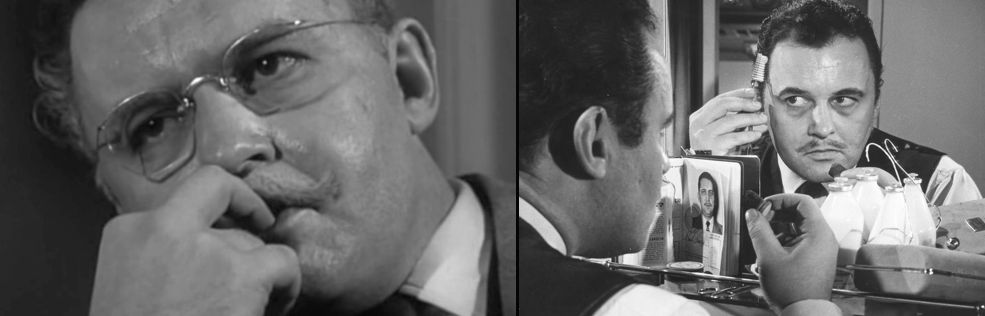

The panicked Steiger is placed in some forced, compromising suspense sequences as he begins his cowardly escape from justice. He assumes the identity of a rail passenger by matching the duped man's passport picture, allowing him to cross the Mexican border. In a heinous act, he shoves the drugged passenger from the speeding train. Embezzlement is one thing. Murder is another. Steiger retains the passenger's suitcase for identity purposes with a plan to dispose of it alongside the road. It snaps open, revealing that the man is wanted in Mexico for the assassination of a Mexican governor. An unfortunate twist. But Steiger's sweaty fingers have apparently lost the man's passport. But it gets worse. The man survived his abrupt train departure. Rescued and secretly treated by his “personal” doctor, the assassin is recovering in a singular motel along a Texas thoroughfare. Bandaged and in traction from head to toe—similar to the hilarious final scene in It's a Mad, Mad, Mad, Mad Worldthe man is threatened by Steiger at gunpoint for his passport.


There is a fair amount of assuming throughout the film. Steiger gets apprehended at the Mexican border, and the authorities assume he is their wanted man. But the smug thief tells them who he really is. They could not care less. Steiger is further stunned. The assassin's wife confesses that he is her husband! Hard to believe there was no initial question about why he was assuming that particular man's identity. Finally, Steiger's angry demands assume he is above the law, even offering a bribe to the Mexican police chief to get “his” passport back.

The police chief and the British inspector conspire to keep Steiger trapped in the Mexican border town to pressure him into escaping across the bridge back to America for prosecution. But the agreement is a one-sided affair in Mexico’s favor. He is never getting out of Mexico. Steiger is content to settle in the town for as long as it takes. His wealth buys him whatever he desires until the political assassin’s body is returned home, killed in a Mexican raid at the motel. I am not sure why the townspeople feel Steiger is responsible for leaving behind a widow and child, but they band together, refusing his money or his existence.

Note: After assuming that unfortunate identity, Steiger is unaware that he is now the owner of an adorable spaniel. Rather risky when the baggage car handler has to remind him not to leave his previously fawned-over pet behind. The dog seems to recognize the impersonated face and follows him around town. When Steiger disposes of the assassin's suitcase, he also tries to leave the dog behind. Weary and exhausted from escaping, his life is spared by the whimpering dog alerting him to a scorpion on his trousers. Steiger has a change of heart toward the dog, and it eventually becomes his only friend. Yet the catalyst for his death.

April 17, 2020

IRON MAN (1951)


This eighty-two-minute film noir, directed by Joseph Pevney, is helped by a strong cast starring Jeff Chandler, Evelyn Keyes, and Stephen McNally. Produced by Aaron Rosenberg and distributed by Universal Pictures, it is a few notches below the likes of the previously released The Set-up or Champion, and despite the title, it is not a marvel. It will help to have an affinity for boxing, Hollywood style. Even so, this is simply another one from an extremely long list. Just enjoy watching these professionals perform.


The film is told in flashback through the eyes of Keyes, who gets effectively watery by the end. Agonizingly watching her husband, Chandler, in the ring for perhaps the last time, the film transitions to a “romantic” Pennsylvania coal town where we are introduced to the main cast. Among the hearty group of coal miners is James Arness in a small role. He is always bad-mouthing Chandler in the hopes of picking a fight. He apparently hates him because he seems smarter than himself. Not surprisingly, a cave-in occurs, but Chandler recovers. The other men trapped have an unknown future, as we never see them again. Due to the speculative encouragement by the older brother, McNally, Chandler never returns to the "miner leagues." McNally has always envisioned a future boxing career for his kid brother.


McNally is a thick-headed deal-maker, gambler, and manipulator out to make a buck, ignoring any knowledgeable advice. He remembers Chandler's explosive temper as kids would laugh at him because of his towering height. That killer instinct signifies a champion to McNally. However, after a few practice matches, his face becomes quite intimate with the mat. Fans start laughing at him for a different reason. But Chandler goes into a rage, ripping into his opponent in a savage display of anger. A smiling McNally blurts out, “There it is!” Unfortunately, McNally knows no more about what makes a boxer than Jack Benny.

Winning his bouts with unsportsmanlike conduct has earned him a reputation as a lousy fighter, and sportswriter Jim Backus says as much in his columns. He has no business being in the ring, and the crowds agree. McNally still thinks his brother will eventually gain his undeserved respect. In somewhat of a surprise, Backus turns out to be an understanding mentor of sorts as he learns of Chandler’s backstory. Oddly, Keyes feels totally responsible for Chandler’s fighting fate, when it is clearly McNally's fault.


Rock Hudson, who desperately wants to be called “Speed” when his time comes to get into the ring, sounds as though he inhaled a slight dose of helium. He comes across well as a golly-gee-whiz naive kid who thinks Chandler is the epitome of a champion. It does not take long, however, before Chandler’s lousy attitude alienates everyone in his circle. At the badgering of McNally, Backus informs the trainer to let Chandler fight the young upstart, now “Mister Speed.” The title bout is pretty exciting with the best boxing choreography of the film, though it all looks familiar. To everyone’s surprise, Chandler fights legit and gets the tar beaten out of him near the end of the match. The crowd’s boos turn to cheers out of respect and to the delight of the facially dented, nearly blind Chandler. He has used his face as a metaphor for obliterating his past.

April 10, 2020

MACAO (1952)


You are not alone if you think this might be a follow-up to His Kind of Woman, released the previous year, or perhaps its backstory from The Las Vegas Story, released the same year. The film opens with a voice-over introduction about Macao being its own Las Vegas. Coincidence? Of the three RKO Radio Pictures, “Woman” was superior to this box office failure. Jane Russell seemingly uses a slightly altered script and wardrobe of a nightclub singer looking for a gig while snarling a few lame comebacks to any advancing male. Despite its star power, this eighty-one-minute film plays out slower than a one-person rickshaw. That responsibility falls heavily on director Josef von Sternberg, who had few fans among the cast. The screenplay by Bernard Schoenfeld and Stanley Rubin did not make this a memorable experience, either. Everyone’s low-key performance is sleep-inducing, and it takes nearly sixty minutes to get enough energy to overcome narcolepsy. Producer Alex Gottlieb hired the uncredited Nicholas Ray to step in and revitalize the climactic fight scene between Robert Mitchum and Brad Dexter. The result is not noteworthy, so I can only imagine how Sternberg originally planned it.


Memorable is Mitchum's chemistry opposite Russell, his kind of woman. He always earns his salary but glides through this film to ensure his house payment is on time. His trademark walking, as if his knees bend fore and aft, skims across floors with a manikin's upper body. He plays a laid-back drifter avoiding authorities in America. Russell is the only detail that he and Dexter have in common.

Painted into a familiar white strapless dress, Russell could never be called diminutive at 5’ 7” plus heels. Once again, a fabulous necklace fills the vast trapezoid below her neck. Despite a limited vocal and acting range, Russell was blessed with a fine alto voice. Though she appears to be belting out some notes, there is not an equal amount of sound coming out. The curse of early lip-syncing. Also limited is her vocal dynamic, never rising past mezzo-forte for these easy-going numbers. True enough, she was popular just standing still. Russell’s role is not precisely defined, yet she is good enough to pickpocket Mitchum’s wallet in the early going without him immediately noticing. The script subjects both to clichéd misunderstandings, making waves even in port.


Also from that “Vegas” movie is Dexter, again in his stereotypical, mid-century role. He plays the conniving casino owner and underworld boss who hires Russell to sing at his club. He appears to lack sleep for most of the film, perhaps thinking of her night and day. Though wanted by the authorities, he remains safe inside the three-mile limit of international waters. On his leash, doing his dirty work is a knife-throwing Philip Ahn and a slimy police lieutenant, Thomas Gomez, who informs him that Mitchum is an undercover cop. Jealousy over Russell, Dexter tries to bribe Mitchum into leaving Macao with the additional intention of ridding himself of the assumed detective.


William Bendix is introduced as a salesman. Not completely legit, he offers Mitchum a commission if he helps sell a stolen diamond from a necklace to Dexter, who is not interested because it is the same necklace he recently tried selling in Hong Kong. Later, mistaking Bendix for Mitchum from behind, Ahn sends a knife into an obvious protective “corkboard” under his suit coat. The knife wobbles a bit, nearly dropping from his back—Bendix has to hold it in place—before he falls. Ahn is disabled—possibly killed—improbably fast, quicker than a Vulcan nerve pinch by Mitchum’s arm around his throat. Bendix shares his final “sales pitch” with Mitchum.

Note: The three leads all have a turn at potentially funny quips. Rarely do they work all that well. However, there are a couple of noteworthy instances best suited for Mitchum. He asks Bendix what the “C” in his middle name stands for. He sheepishly replies, “Cicero. But keep it under your hat.” Understanding the obvious, Mitchum says matter-of-factly upon leaving the room, “What else would I do with it?” Mitchum is given another zinger after he delivers Dexter to the authorities in international waters. Drenched from going overboard, Mitchum climbs aboard where Russell awaits. They start to embrace, but she cautions him, “You’re all wet!” to which he replies, “You had better start getting used to me fresh out of the shower.” Their future is anchored with a kiss.

April 3, 2020

FORGOTTEN FILMS: TV TRANSITION

Though typically overshadowed by Hollywood's A-list, there were respectable performances by numerous actors and actresses who never became major film stars. A common occurrence was their transition to the new medium of television, often becoming familiar faces in homes across America. These periodic posts offer insight into their transition.


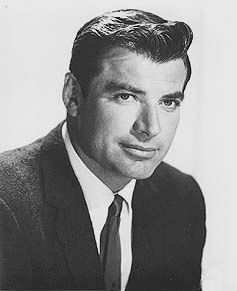
John Bromfield: Farron Bromfield (1922-2005)

John Bromfield was a leading man in B-movies during the mid to late 1950s who possessed a fine voice and a square-jawed handsomeness. While still in his mid-twenties he became a contract player for Paramount Pictures. His early acting gigs placed him shoulder-to-shoulder with some big names in Sorry, Wrong Number (1948) and Rope of Sand (1949). Bromfield was an obvious candidate for leading man status by mid-century. His brief career churned out such forgotten films for Bel-Air Productions as, The Big Bluff (1955), Three Bad Sisters (1956), and Crime Against Joe (1956), co-starring another transition to television, actress-singer Julie London. Like most of these features, the film possessed some unintentionally funny moments in between London’s comatose performance. A decent script and on-location filming helped make Hot Cars (1956) his most authentic of the era. His role for Universal International Pictures, Revenge of the Creature (1955),  “earned” him cult status, after a fashion.

Bromfield’s transition to television was instant, bringing him notoriety from living rooms across America. The syndicated modern-day western series, The Sheriff of Cochise (1956-60) was a big success as officer Frank Morgan chased bandits by station wagon, not on horseback. The Chrysler Corporation was a sponsor and late episode viewers could see a DeSoto Fireflite Explorer station wagon complete with a shotgun clipped to the driver's side door panel. Due to the show’s success—thanks to Bromfield, location filming and accurate portrayal of law enforcement—he was made an honorary deputy by the real sheriff of Cochise County. Morgan was promoted to U.S. Marshall status and the entire state of Arizona was under his purview and the third season gained a new title, U.S. Marshal. Bromfield embraced the television medium and the show wholeheartedly. His co-star for one season, Stan Jones, playing Deputy Harry Olson, was the creator of the series.

Note: Bromfield was born in South Bend, Indiana, and soon developed strong athleticism. Hollywood knew him as a health enthusiast. Female fans knew him as a hunk. After leaving acting abruptly in 1960, he produced sports shows. Before being discovered by an acting agent he was a tuna fisherman. He returned to those roots in retirement as a commercial fisherman off Newport Beach.